
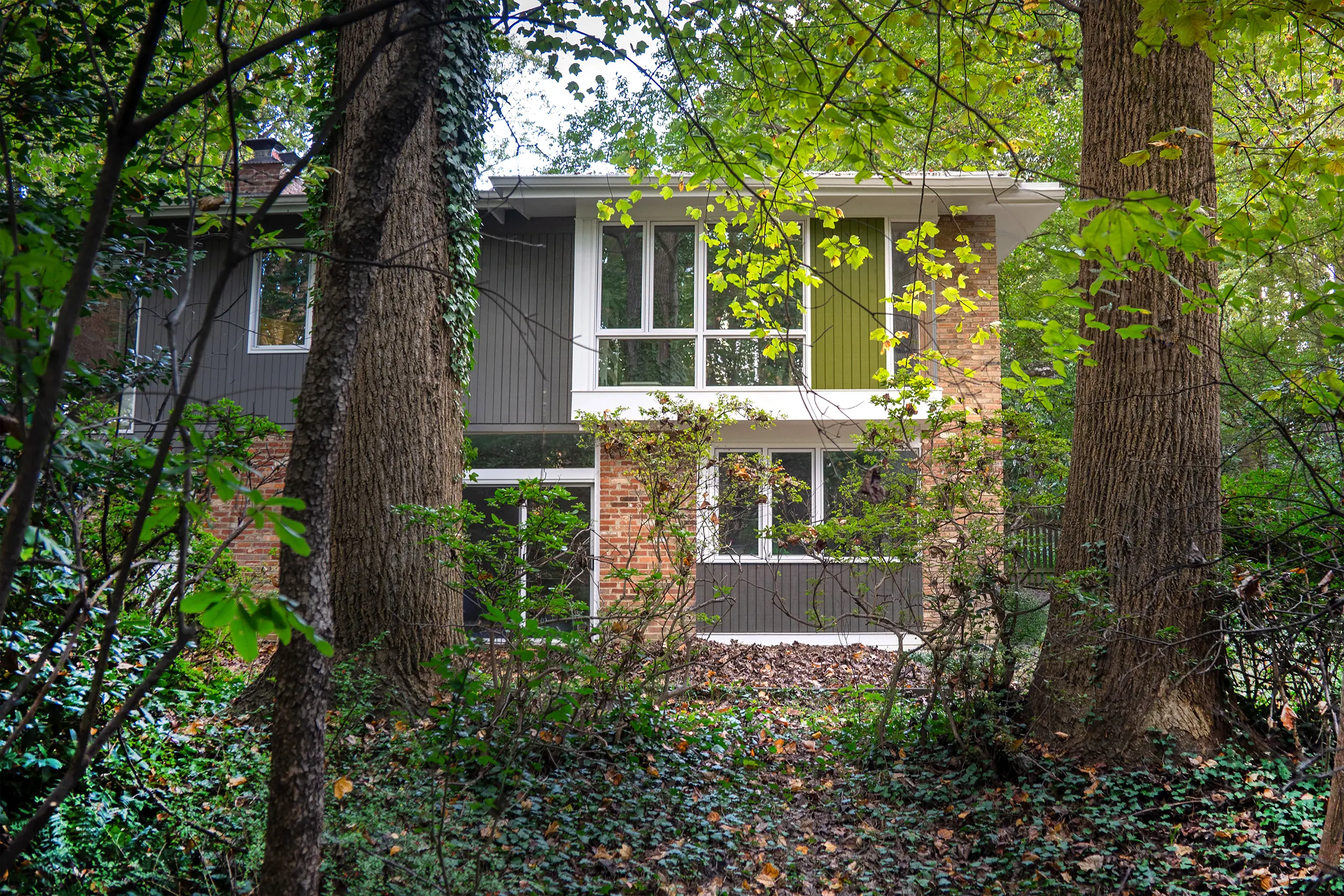
Home Addition + Interior Alterations
Bringing in the great outdoors
A busy professional family — two kids, an assortment of pets, and the cheerful chaos that comes with both — found their next chapter in a mid-century modern neighborhood in Falls Church, Virginia, a suburb of Washington DC. Accustomed to the larger bedrooms of their previous Arlington home, they were willing to embrace the modest scale of mid-century modern living, but only up to a point. What they needed most, and what the house couldn’t yet offer, was a private retreat from the energy of daily family life — a quiet sanctuary at the end of the day. That need became the starting point for everything that followed.
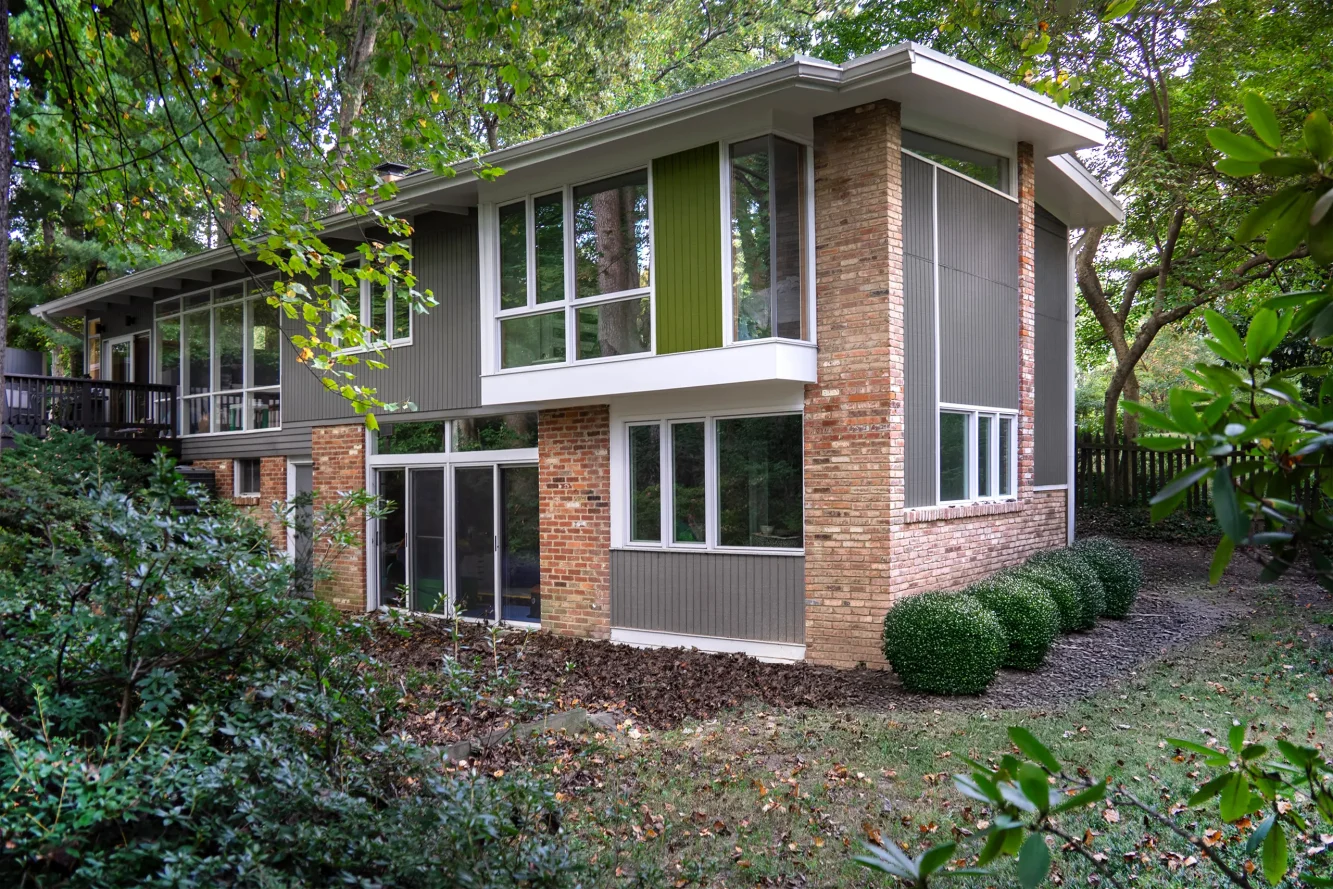
A cantilevered window volume laps the original home at the new addition and works well to blur the line between old and new
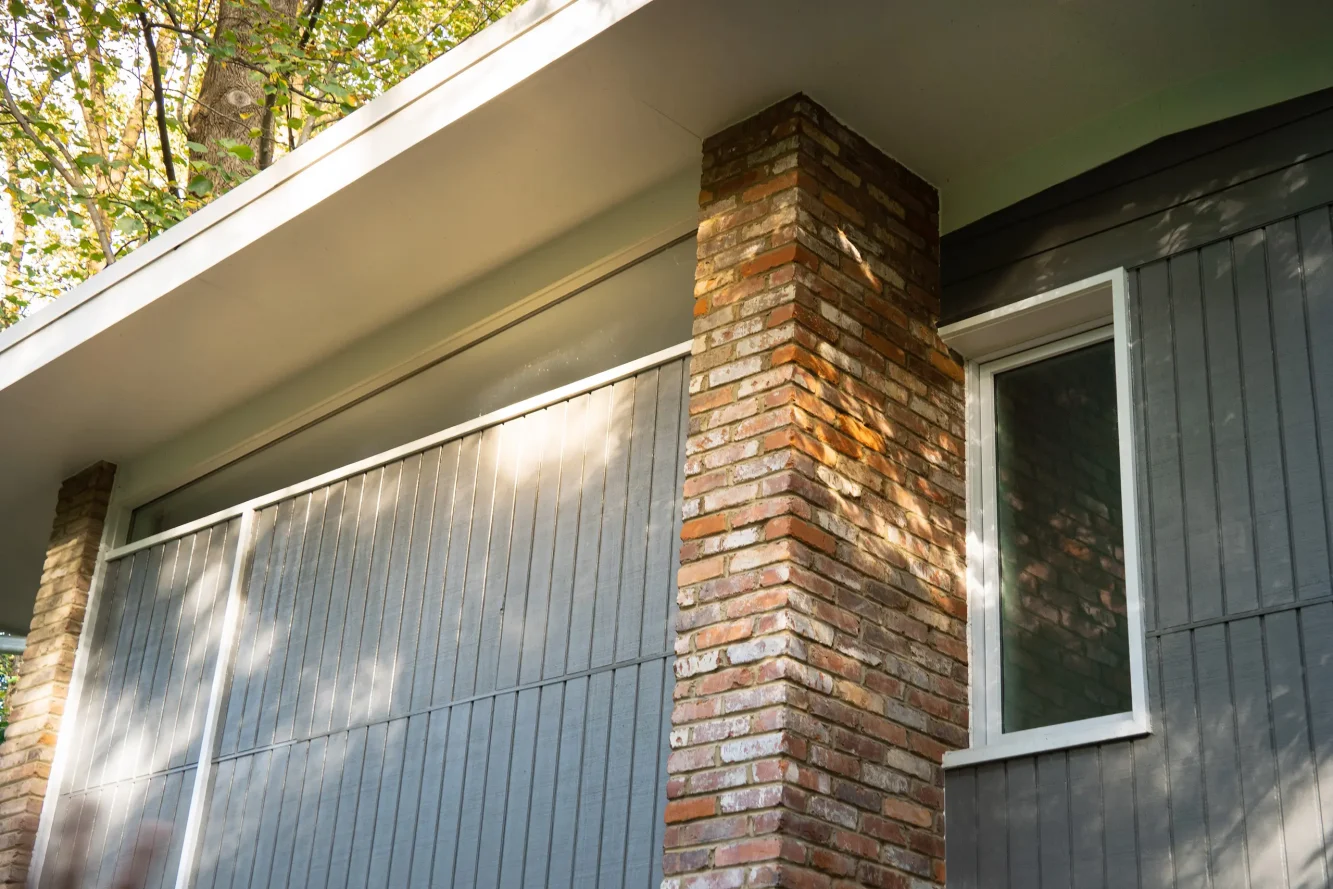
While a transom window continues the architectural language of the original home a new slot window anchors artfully to the carefully matched brick
Identifying the Team
The homeowners came to deJong Studio through a realtor recommendation — a relationship the practice values deeply. Realtors who understand what thoughtful architectural design can unlock in a mid-century modern home are invaluable partners, helping clients imagine not just what a home is, but what it could become. For this family, that imaginative leap led to a clear design objective: to bring the transparency and openness of the home’s public living areas into the private bedroom wing, allowing the tranquility of the surrounding landscape to filter in.
Designing the Addition
The existing bedroom wing presented familiar constraints — rooms that felt tight and inward-looking, disconnected from the wooded lot that made the property so special. The addition addressed this directly, enlarging the modest bedrooms and introducing a generous, light-filled primary bath. The design strategy throughout was to dissolve the boundary between inside and out: walls of glass replace what had been solid enclosures, and the lush treetop panorama becomes an ever-present backdrop to daily life.
A cantilevered bedroom window wall reaches out toward the canopy of trees while Douglas fir interior mullions and a frameless glass corner effortlessly dissolve the boundary between structure and landscape. The continuous flow of flooring from bedroom into bathroom reinforces this sense of dissolution, blurring the threshold between the two spaces and drawing the eye outward through the glazing beyond.
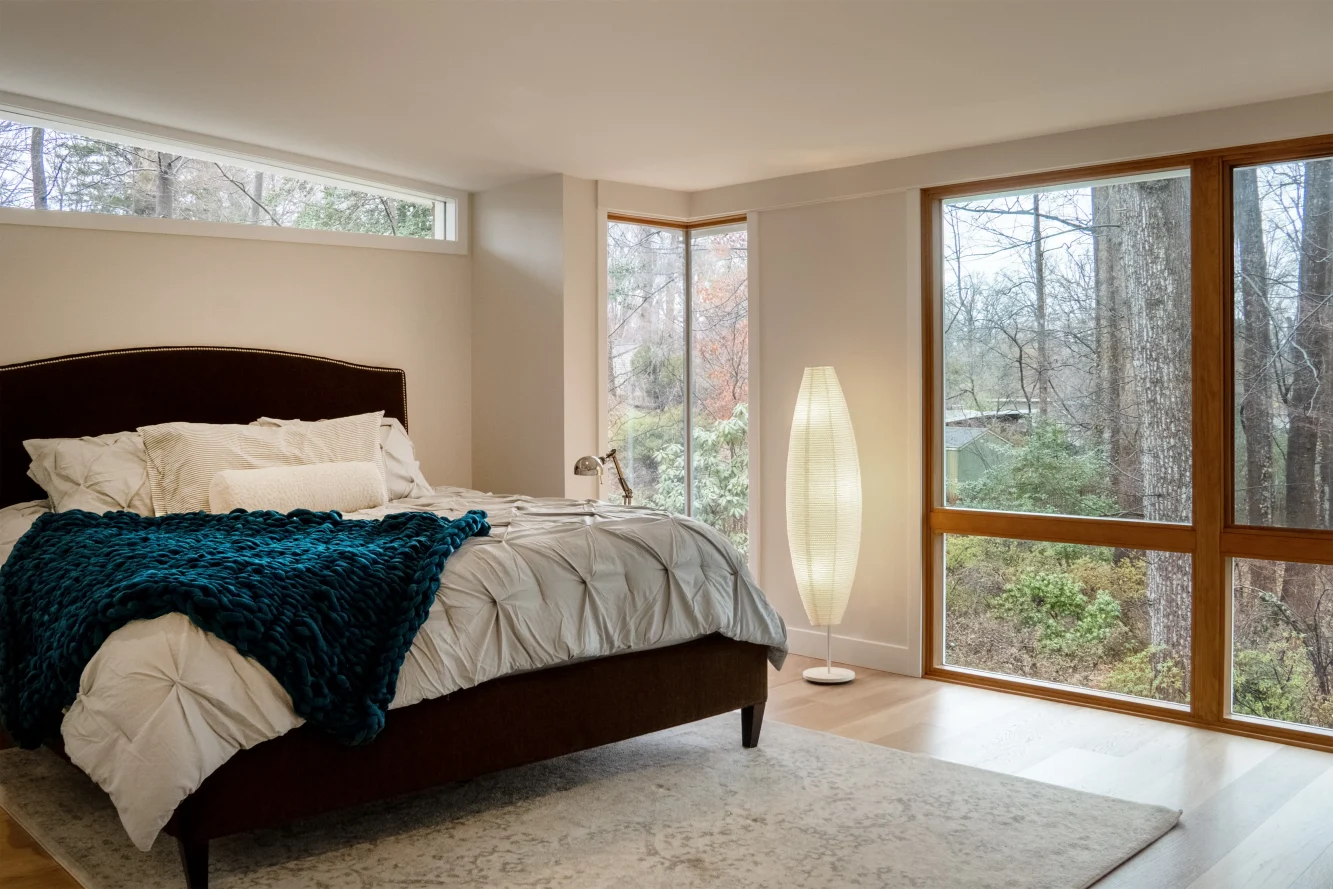
Minimal wall frames the new primary headwall blurring the lines between inside and out
The primary bath continues the same spirit of quiet luxury. A sliding glass wall opens directly to a serene, filtered wall of greenery, making the act of bathing feel unhurried and deeply private. A freestanding tub beneath a skylight captures shifting daylight and dappled shadow throughout the day — a perfect perch for a scented candle on the adjacent ledge. A handcrafted teak vanity, mid-century modern in its sensibility and bespoke in its execution, anchors the space with warmth and precision.
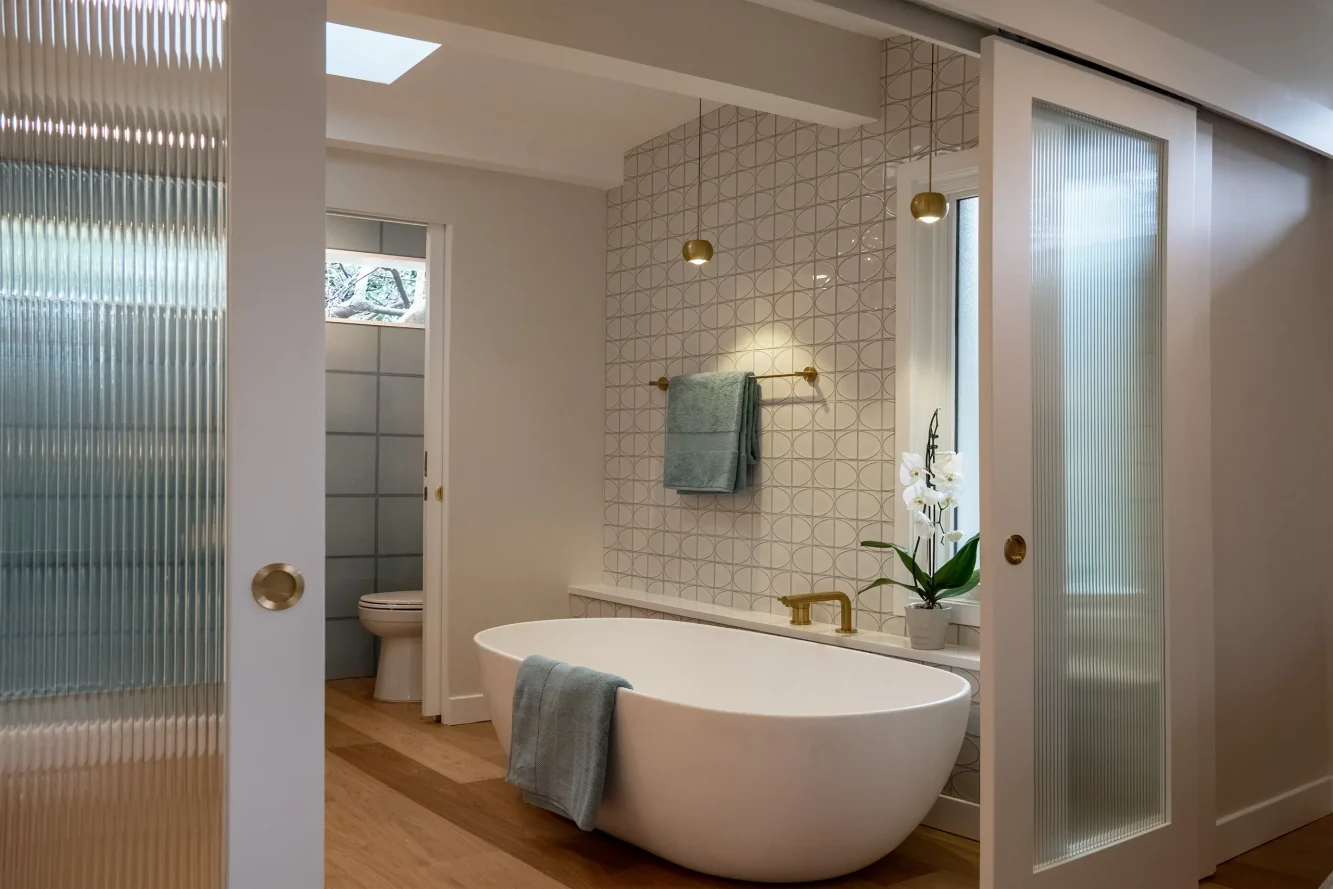
Sliding glass doors reveal a primary bath meant to be seen
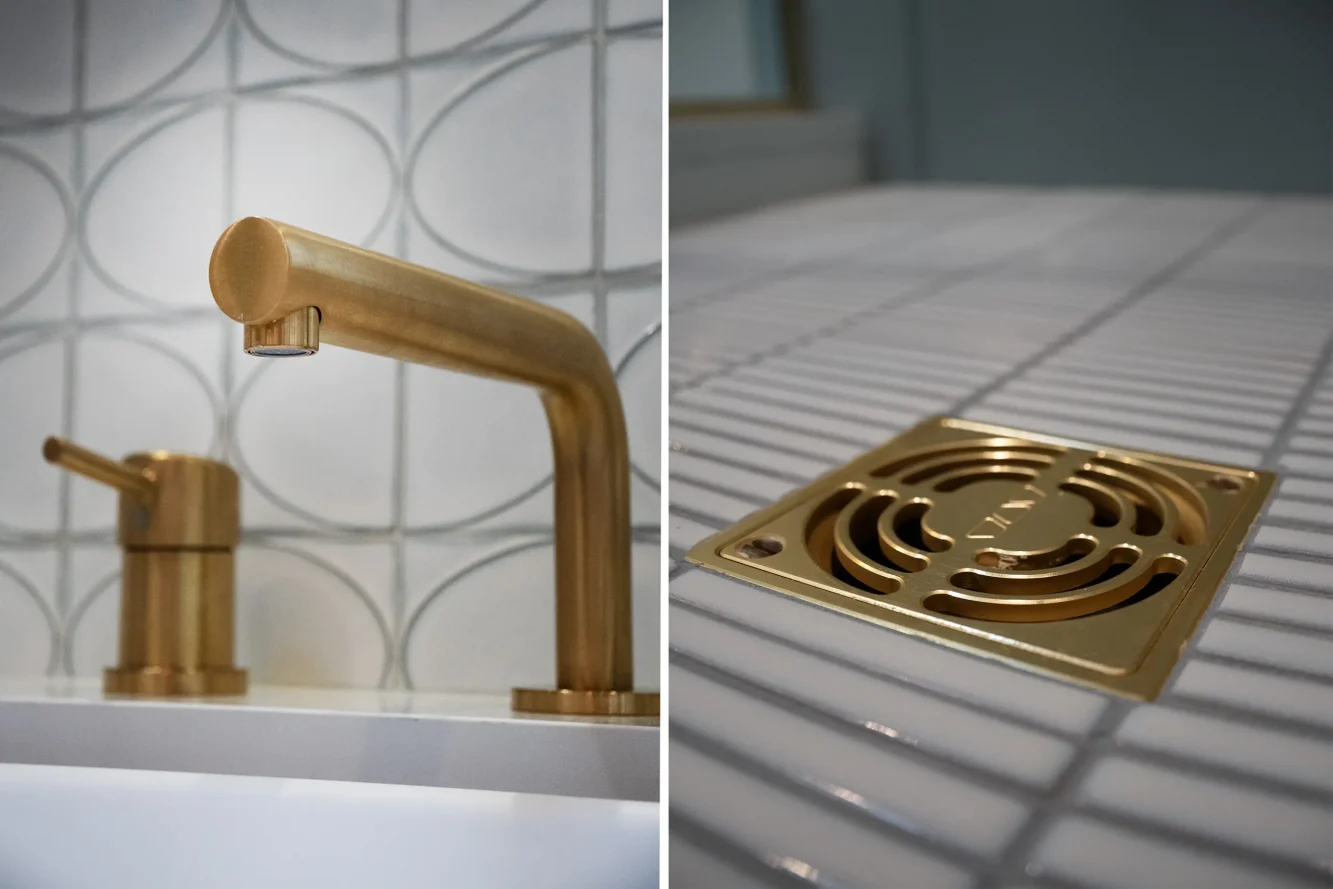
Luxury is in the details for this primary bath – faucet and shower tile and drain
Below the primary suite, a quiet study occupies the base of the addition. Tucked beneath the bedroom and oriented toward the same wooded surroundings, it offers a contemplative retreat — a place for focused thought while remaining immersed in the filtered light and shifting greenery beyond the glass.
Connecting Old and New
Rather than announcing itself as an addition, the new work builds upon the design language of the existing home — extending its post-and-beam logic, honoring its material palette, and continuing the floor-to-ceiling glazing that defines the best of mid-century modern design. The Douglas fir framing, the teak millwork, and the careful detailing throughout speak the same quiet material language as the original house. The line between old and new is intentionally blurred, the addition feeling less like an appendage and more like the fulfillment of what the original house always aspired to be.
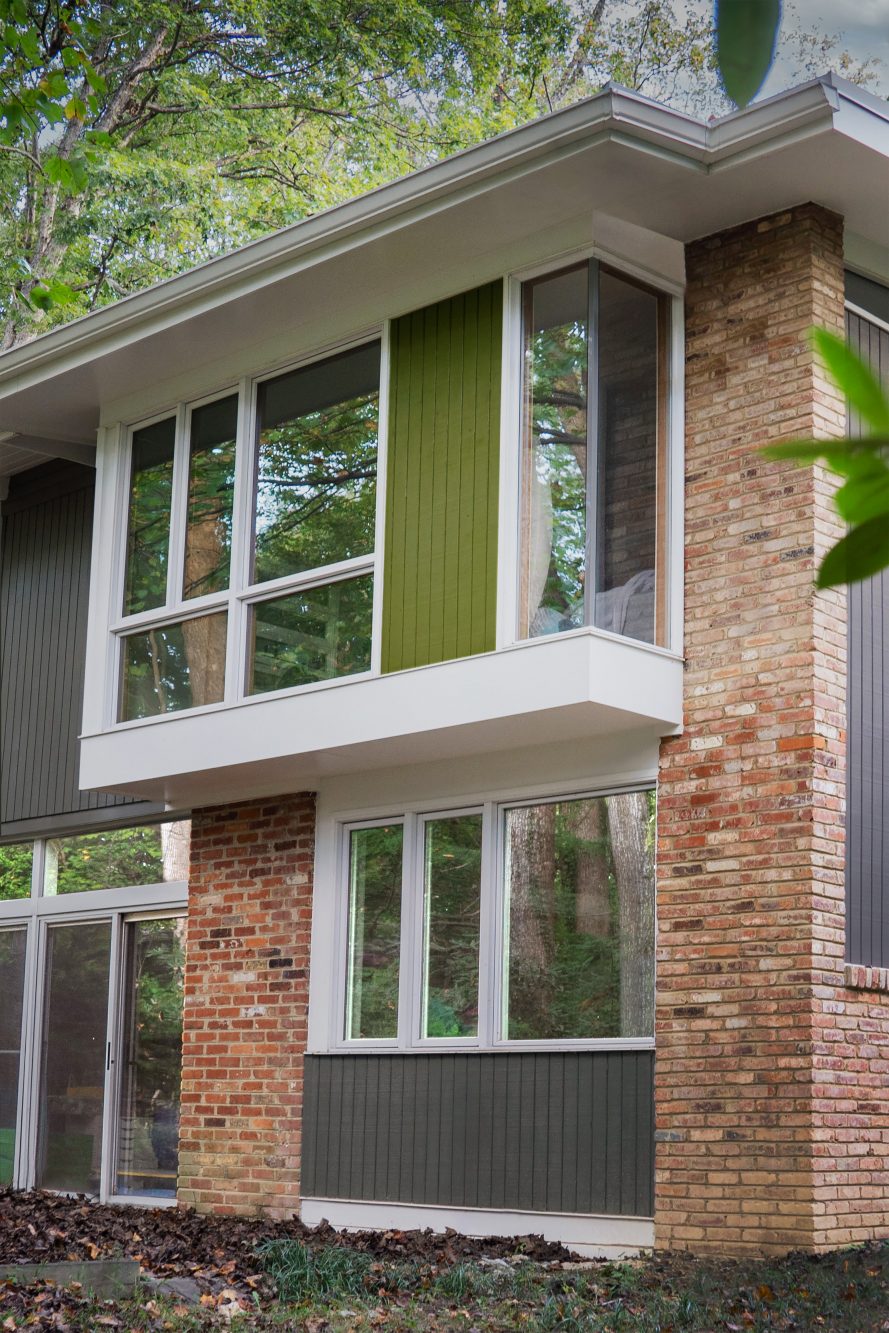
The new addition features cantilevered window bay, frameless corner and playful color blocking
The Completed Addition
This Falls Church, Virginia mid-century modern addition demonstrates what becomes possible when a home’s natural setting is treated not as a backdrop but as a design partner. Once defined by the contrast between open public spaces and closed private ones, the house now carries that same spirit of openness from front to back. In one of Northern Virginia’s most beloved mid-century neighborhoods, it stands as a quiet example of how thoughtful architectural design can transform the way a family lives — and how a home feels — for decades to come.
Photographer: Renik deJong